
"annual yield"
2000 article(s) found

Introduction to Colombian Hope Manor Coffee with Sweet in Acid and low bitterness
The suitable climate in Colombia provides a real natural pasture for coffee. Coffee trees in Colombia are mainly cultivated in the Andes, on steep slopes about 1300 meters above sea level, where the annual temperature is about 18 degrees Celsius, annual rainfall is 2000 to 3000 millimeters, latitude 1-11 15 north, longitude 72-78 west, and the specific range of elevation can exceed 2.000 meters. By

Characteristics of taste and flavor in Bolivian areas
Bolivia, located on the southeast side of Peru, is an alpine country. La Paz (capital) is 3660 meters above sea level. Coffee cannot be grown in such a cold place. But YUNGAS, northeast of La Paz, borders the Amazon basin. The altitude is a little lower. About 1500-2500 meters. The average annual temperature is about 10-15 degrees without frost damage in winter. The fertile soil is characteristic of the main coffee producing areas in Bolivia. America

How does the Brazilian Queen's Manor Coffee come from? what's the grade of Brazilian coffee beans?
For professional baristas, please follow the Coffee Workshop (official Wechat account cafe_style). Fazenda Rainha (Queen Farm) is located in Alta Mogiana, So Paulo, north of Sao Paulo City. The estate is well known in Brazil and is owned by the Carvalho Dias family. Carvalho Dias has four estates.

A country of mountains. Bolivian coffee growing area in La Paz
Bolivia is described as a country of mountains, southeast of Peru. La Paz is 3660 meters above sea level. Coffee cann't grow in this cold. But YUNGAS, northeast of La Paz, borders the Amazon basin. The altitude is slightly lower. About 1500-2500 meters. The average annual temperature is about 10-15 degrees and there is no frost damage in winter. Fertile soil is characteristic of Bolivia's main coffee-producing area

Rwanda Coffee Flavor description, Grinding degree, Taste characteristics, Price Fine Coffee in producing area
The suitable climate in Colombia provides a real natural pasture for coffee. Coffee trees in Colombia are mainly cultivated in the Andes, on steep slopes about 1300 meters above sea level, where the annual temperature is about 18 degrees Celsius, annual rainfall is 2000 to 3000 millimeters, latitude 1-11 15 north, longitude 72-78 west, and the specific range of elevation can exceed 2.000 meters. By

Flavor description of Arabica Coffee beans introduction of Grinding scale in producing area
"Bourbon" bourbon is an ancient and excellent variety juxtaposed with iron pickup, and some botanists believe that bourbon is an early variety of iron pickup after it was transplanted to Yemen. Bourbon is almost all round beans, beans are a little smaller than tin card, ripening later, but the yield is 30% more than tin card. It is suitable for growing above 1200 meters above sea level, and its flavor is obviously more prominent than those below 1000 meters, but there is a deficiency in bourbon.

Coffee tree plant yield Planting environment Production area Manor Country introduction
Coffee planting introduction Many industry insiders also revealed to reporters that Hainan's coffee is currently on the verge of exhaustion of production sources. Most of the products on the market under the banner of authentic Hainan coffee are processed with Vietnamese and Yunnan coffee beans. Hainan imports about 3000 tons of coffee beans from Yunnan every year, and two or three thousand tons of coffee beans from Vietnam, Brazil and other places. Take Xinglong Coffee as

Introduction to Bolivian Coffee Manor, producing area of Alpine country Coffee
This is the description of Bolivian coffee; Bolivia, located on the southeast side of Peru, is. La Paz (capital) is 3660 meters above sea level. Coffee cannot be grown in such a cold place. But YUNGAS, northeast of La Paz, borders the Amazon basin. The altitude is a little lower. About 1500-2500 meters. The average annual temperature is about 10-15 degrees without frost damage in winter. The fertile soil is characteristic of the main coffee producing areas in Bolivia. America

Poor harvest of coffee beans due to severe drought in central Vietnam
The worst drought in central Vietnam in a decade has severely affected the coffee bean harvest in the latest season, with yields down more than 25 per cent from the previous season. According to Vietnamese media, the state-run Vietnam Coffee Company said that due to the severe dry weather, the annual rainfall in the highland coffee-growing areas in central Vietnam in 2012 was only half of the average in previous years, hindering the normal health of coffee.

Introduction to the Blood Manor of the Coffee producing country of Bolivia
In boutique coffee, this is the description of Bolivian coffee; Bolivia, located on the southeast side of Peru, is an alpine country. La Paz (capital) is 3660 meters above sea level. Coffee cannot be grown in such a cold place. But YUNGAS, northeast of La Paz, borders the Amazon basin. The altitude is a little lower. About 1500-2500 meters. The average annual temperature is about 10-15 degrees without frost damage in winter. The fertile soil is Bolivia.

Introduction of Bolivian coffee producing areas with excellent coffee varieties
Arabica coffee cannot be grown in cold places above 2000 meters above sea level. if the altitude is too high, coffee trees will frost because the temperature is too low. So Bolivian coffee is mainly grown in the Yungas region northeast of La Paz. It borders the Amazon basin and is about 1500-2500 meters above sea level with an average annual temperature of about 10-15 ℃. Therefore, it ensures the growth of coffee.

High quality and sour Bolivian coffee beans introduce boutique coffee
Arabica coffee cannot be grown in cold places above 2000 meters above sea level. if the altitude is too high, coffee trees will frost because the temperature is too low. So Bolivian coffee is mainly grown in the Yungas region northeast of La Paz. It borders the Amazon basin and is about 1500-2500 meters above sea level with an average annual temperature of about 10-15 ℃. Therefore, it ensures the growth of coffee.
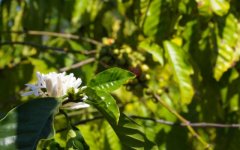
The difference between Hainan coffee beans and Yunnan coffee beans Hainan coffee and Yunnan small coffee beans taste
What are the respective characteristics of coffee beans from these two places? Yunnan small-grain coffee belongs to the Katim species (a variety of Arabica), which is an improved variety of Tibika among the Arabica species, with 25% of the genes of the Robosta species. In the mountainous area with an elevation of 800m to 1800m, the temperature is about 21.5℃ and the annual precipitation is 700~1000mm. It takes 8 to 10 months for the fruit to mature.

Treatment of coffee beans in manors in Bolivian coffee bean producing areas
This is the description of Bolivian coffee; Bolivia, located on the southeast side of Peru, is an alpine country. La Paz (capital) is 3660 meters above sea level. Coffee cannot be grown in such a cold place. But YUNGAS, northeast of La Paz, borders the Amazon basin. The altitude is a little lower. About 1500-2500 meters. The average annual temperature is about 10-15 degrees without frost damage in winter. Fertile soil is a special feature of the main coffee producing areas in Bolivia.

The Bolivian coffee producing area of Tibica, which produces excellent coffee varieties.
Arabica coffee cannot be grown in cold places above 2000 meters above sea level. if the altitude is too high, coffee trees will frost because the temperature is too low. So Bolivian coffee is mainly grown in the Yungas region northeast of La Paz. It borders the Amazon basin and is about 1500-2500 meters above sea level with an average annual temperature of about 10-15 ℃. Therefore, it ensures the growth of coffee.

Taste of Bolivian Coffee Manor Yongas, northeast of La Paz, snow vein manor
This is the description of Bolivian coffee; Bolivia, located on the southeast side of Peru, is an alpine country. La Paz (capital) is 3660 meters above sea level. Coffee cannot be grown in such a cold place. But YUNGAS, northeast of La Paz, borders the Amazon basin. The altitude is a little lower. About 1500-2500 meters. The average annual temperature is about 10-15 degrees without frost damage in winter. Fertile soil is a special feature of the main coffee producing areas in Bolivia.

Bolivia Coffee How to taste Growing environment Producing area Price Flavor Description Introduction
Arabica coffee cannot be grown at altitudes higher than 2000 meters, and if the altitude is too high, the coffee trees will freeze due to the low temperature. Bolivian coffee is mainly grown in the Yungas region northeast of La Paz. Bordering the Amazon River basin, it is about 1500-2500 meters above sea level and has an average annual temperature of about 10-15 ° C. Therefore, coffee growth is guaranteed.

Bolivian coffee flavor what coffee beans are used for hand-brewed coffee
In boutique coffee, this is the description of Bolivian coffee; Bolivia, located on the southeast side of Peru, is an alpine country. La Paz (capital) is 3660 meters above sea level. Coffee cannot be grown in such a cold place. But YUNGAS, northeast of La Paz, borders the Amazon basin. The altitude is a little lower. About 1500-2500 meters. The average annual temperature is about 10-15 degrees without frost damage in winter. The fertile soil is Bolivia.

There are bright sour berries. Introduction to Bolivian coffee with almond flavor and hazelnut sweetness
In boutique coffee, this is the description of Bolivian coffee; Bolivia, located on the southeast side of Peru, is an alpine country. La Paz (capital) is 3660 meters above sea level. Coffee cannot be grown in such a cold place. But YUNGAS, northeast of La Paz, borders the Amazon basin. The altitude is a little lower. About 1500-2500 meters. The average annual temperature is about 10-15 degrees without frost damage in winter. The fertile soil is Bolivia.

Flavor description of Colombian Ramon Coffee beans introduction of Grinding scale varieties in Manor production area
Colombian Ramon coffee bean flavor description taste manor grinding scale variety introduction regardless of yield or texture, Colombian coffee is first produced by Medellin, which is characterized by full granules, rich nutrition, moderate acidity and good balance. And rich aroma, soft and smooth taste. In addition to Medellin, Armenia is the capital of two neighboring provinces in the south.